App developers for hire: 5 questions to ask before you sign
Five questions a non-technical founder can ask app developers for hire to spot a failing project in month one, plus freelancer vs fixed-bid vs dedicated team.
Por Victhor Araújo
Founder of Revin. Engineer by training, specialist in software development and digital products.

The first question is the simplest: what can you open on your phone when the sprint ends
If you are looking at app developers for hire and you can't read code, you still need five answers before you sign. What will you be able to open on your phone at the end of every sprint. Whose name is on the repository and the App Store, Google Play and cloud accounts. Who will actually write the code. How the timeline estimate is built. And what happens to whatever gets left out of each cycle. If a vendor dodges any of these on a sales call, they will dodge them during the project.
The whole list fits in a meeting of about 90 minutes. It would have told me in month one what I only understood after my startup was gone.
The startup that died one almost-finished sprint at a time
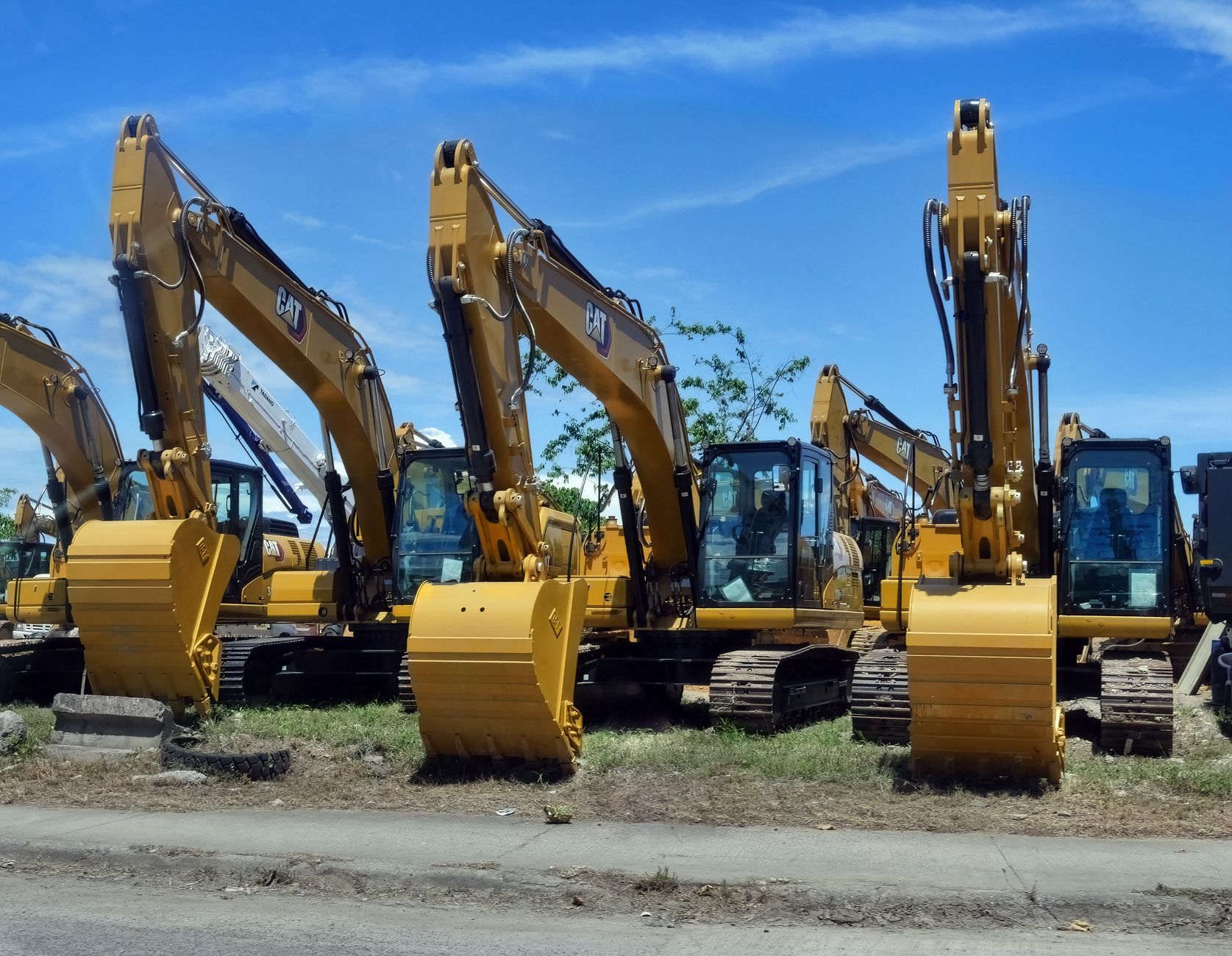
The startup rented construction equipment, and the app never kept pace with the schedule
Before Revin, I founded a construction equipment rental startup in Brazil, an Uber-style marketplace: a contractor who needed a machine on site could find someone whose machine was sitting idle. I came from mechanical engineering and industrial assembly. I could read a construction schedule and push a subcontractor on it. I assumed hiring developers to build the app would feel similar.
It didn't. What I lacked was the ability to judge what the developers told me. When someone explained why a feature slipped, I couldn't tell a real technical problem from a well-told excuse. I couldn't tell whether a requested deadline was tight or padded. The sprint ended, the expected delivery didn't show up, and the next sprint opened with the same promise.
I went back to writing code to see what was going on underneath. That helped me understand the problem. It didn't save the company.
What survived was a short list of questions that would have exposed the problem early. None of them is technical.
Why this search is spiking
In the US, "app developers for hire" sits between 1,000 and 10,000 Google searches a month and grew 900% over three months, according to Google's Keyword Planner. Advertisers bid between $84 and $392 per click on it. That price tells you who is searching: founders with a budget and a deadline.
The market's answer to that urgency is thin. One of the longest-running ads in this space, live for more than 300 days, says roughly "hire expert software developers, let's talk." Nobody tells a non-technical buyer how to find out whether the expert is one. That gap is what the questions below close.
Five questions to ask before you sign

Whoever writes the code should be on the call where the deadline is promised
- "What will I be able to install on my phone at the end of the first sprint?" A good answer is specific: a TestFlight link or an installable APK with two or three working screens, ugly or not. A weak answer is "the project foundation" or "the architecture." Foundations are real, but two sprints in a row with nothing you can tap is the exact signal I ignored.
- "Whose name is on the repository, the Apple developer account, Google Play and the cloud account?" Yours, from day one, with the vendor invited in. If the code lives in their account, they control the exit, and you find that out on the day you want to switch.
- "Who is writing the code, and is that person on this call?" Ask for a name, a seniority level and how much of their week belongs to your project. The senior engineer who shines in the pitch and vanishes after kickoff is the most common letdown in outsourced development.
- "Give me the timeline as a range and tell me what hasn't been measured yet." A single round date on the first call is a guess delivered with confidence. An honest estimate comes as a range, a list of unknowns and a date when the range gets tighter.
- "What got left out of this sprint, and why?" You ask this one at the end of every cycle, not in the sales process. A good answer names the item, the reason and what changes next. "It's almost done" twice in a row is what a project without control sounds like.
At my startup, all five would have failed inside the first month. I just didn't know these were the questions.
"I'm a business person, I can't judge the answers"
This objection mixes up two different skills. Judging code takes technical knowledge. Judging behavior doesn't. You don't need to know what a build pipeline is to notice you haven't received a build in four weeks, and you don't need to understand Git to insist the repository is in your name.
There's one more test worth running: ask the developer to explain a technical choice in terms of your business. Someone once asked me whether upgrading MySQL 5 to 7 was the same thing as moving to Postgres. I answered with fruit. MySQL 5 is one kind of banana, MySQL 7 is another kind of banana, Postgres is an apple. All fruit, all SQL databases, but the apple is a different fruit. People who know their field can translate it. If a developer can't explain a decision in words you follow, the communication problem is theirs, and it will come back when the deadline gets tight.
The honest limit: none of these questions tells you whether the code is any good. An app can pass all five and still be built in a way that stalls six months in. For that, pay a few hours to an independent technical reviewer who has no stake in the vendor and have them read the repository.
Freelancer, fixed-bid agency or dedicated team
The underlying question shows up everywhere. "Why would you hire in-house software developers instead of outsourcing?" has more than 7,000 views and eight answers on Software Engineering Stack Exchange, and none of them settles it, because the answer depends on the kind of contract you sign.
A freelancer is usually the cheapest per hour and the most fragile. Everything rides on one person. Before you sign, ask what happens if they're out sick for three weeks or take a bigger client. If the answer is "that won't happen," it has already happened to someone.
A fixed-bid project looks safest, and it's the one I trust least. The model rewards the vendor for shipping the minimum the buyer can't evaluate and walking away after the last invoice. The agency that matches a lower quote takes that discount from somewhere, usually from what you can't see: tests, monitoring, the documentation that would let someone else pick up the work.
A dedicated development team costs more per month and answers question three by design, because the person on the call is the person in the code. It's the model Revin settled on after I had been on both sides of the table: a senior squad embedded in the client's project, with the repository and accounts in the client's name. It isn't right for everyone. For a two-week prototype, a good freelancer is fine.
If you're weighing nearshore options, check a cost baseline before the sales call. Our breakdown of software developer rates in Brazil for 2026 shows what each seniority level costs, so a quote that looks too good gets the scrutiny it deserves. The rest of what we do is on the Revin homepage.
The four-week signal
If you've already signed, you still have time. Count how many things you've been able to open on your phone since the contract started. If the number is zero after four weeks, stop accepting the next sprint as-is and ask all five questions in one meeting, in writing, with written answers.
And one check that works for any contract: if your vendor disappeared tomorrow, could you hand the repository and the app store accounts to someone else by Friday?
7 read minutes
Article content:
Ready to elevate your business
Schedule a meeting



AI software development without architecture: 5 checks before month six
Building with AI without architecture breaks around month six. Five checks you can run without reading code, what each answer means, and the cheaper path before a rewrite.
 Victhor Araújo
Thousands of IF/THEN/ELSE rules: code, engine or spreadsheet
Rules that change weekly belong in versioned data with an owner. Rare rules stay as ifs. When a rules engine pays off, and what the finance spreadsheet really costs.
Victhor Araújo
Why can't IT deliver big projects on time like construction?
Construction slips too. Three contract devices explain the gap: a paid design phase, signed change orders with measurement, and one named engineer of record.
Victhor Araújo
Technical debt you cannot see: measuring cognitive debt
The most expensive technical debt is the rule only one person can explain. A 40 minute test to find that concentration, and what to do once it shows up.
Victhor Araújo