E-invoicing integration: a field change or a real project?
E-invoicing integration is a field change when the invoice already starts inside your system, and a project when the data doesn't. Three questions to ask before any quote.
Por Victhor Araújo
Founder of Revin. Engineer by training, specialist in software development and digital products.

A service invoice looks simple until someone counts the fields the system cannot fill
It's a field change when the invoice already starts inside your system. The customer comes from the account record, the service comes from the contract, the tax comes from a rule somebody wrote once, and what changes is where the message goes, what shape it has, and how it gets signed. It's a project when the invoice is born outside the system: somebody typing into a government portal, somebody pasting rows out of a spreadsheet, somebody picking a service code from memory. In that second case the hard part has nothing to do with the new format. The hard part is building a piece of data that has never existed in your system.
The gap between those two jobs is an order of magnitude. Swapping transport and message format in a system that already issues invoices runs somewhere around ten to fifteen working days for one person who knows the codebase well. Making the invoice start inside the system, with a service catalogue, a tax code per line, withholding rules and place-of-supply logic, runs past two months with more than one person on it, and that window still has to hold certification testing, one live invoice against the real environment, and at least one meeting with your accountant. What follows is the ruler for working out which of the two you're in before you ask anyone for a price.
Replacing a socket and rewiring the house cost different money, and the quote won't tell you which one you bought

Every invoice typed outside the system is an invoice the system does not know exists
Whoever sent you that estimate read the mandate, not your system. The mandate is public and documented to death. There's a message schema, a transport network, a certificate or an access token, a validation service, a human-readable rendering at the end. Whether it's Peppol in Europe, the phased B2B rules coming in France, Germany and Poland, or the forty-odd US states each running their own economic nexus logic for sales tax, you can read the spec on a Saturday afternoon. That's exactly why "it's just an integration" leaves people's mouths so easily.
What nobody checked is whether your system has anything to put in those fields. I've sat on the buying side of that table. In the first company I started, I hired developers without being able to judge a single thing they told me. I heard "quick", accepted the date, and on Friday the thing wasn't there. It wasn't incompetence on their side or naivety on mine. I just didn't know which question separates an adjustment from a build.
The question is whether the data exists. A spec you read in a weekend. Data you build over weeks, sometimes months, because it depends on a human decision your company never wrote down. If you want a cheap way to see who on your side can actually answer that, it's the same exercise as measuring real seniority without trusting a résumé: ask for the decision, not the tool.
The standalone issuer clears the mandate and quietly creates a second ledger
A developer shipped a free desktop issuer for the Brazilian national invoice standard and posted it on a dev forum with a one-line reason that would land in any boardroom in any country: without your own system, you retype customer, service and tax on every single invoice. Ten comments showed up, and the whole thread was people describing their current Tuesday.
These tools work. For a firm issuing ten invoices a month, buying one is the correct decision and the conversation ends there. The trouble starts when you issue three hundred and your revenue lives in your own system. Every invoice typed outside is an invoice your system doesn't know exists. You lose the reconciliation between what was contracted, what was billed and what was collected. You lose the report. You gain a person whose actual job is now copying fields from one screen to another, and that's where the error your accountant finds next month comes from.
The cost was never the licence. The cost is the retyping, and it shows up as headcount nobody budgeted as headcount.
Three questions that move the quote
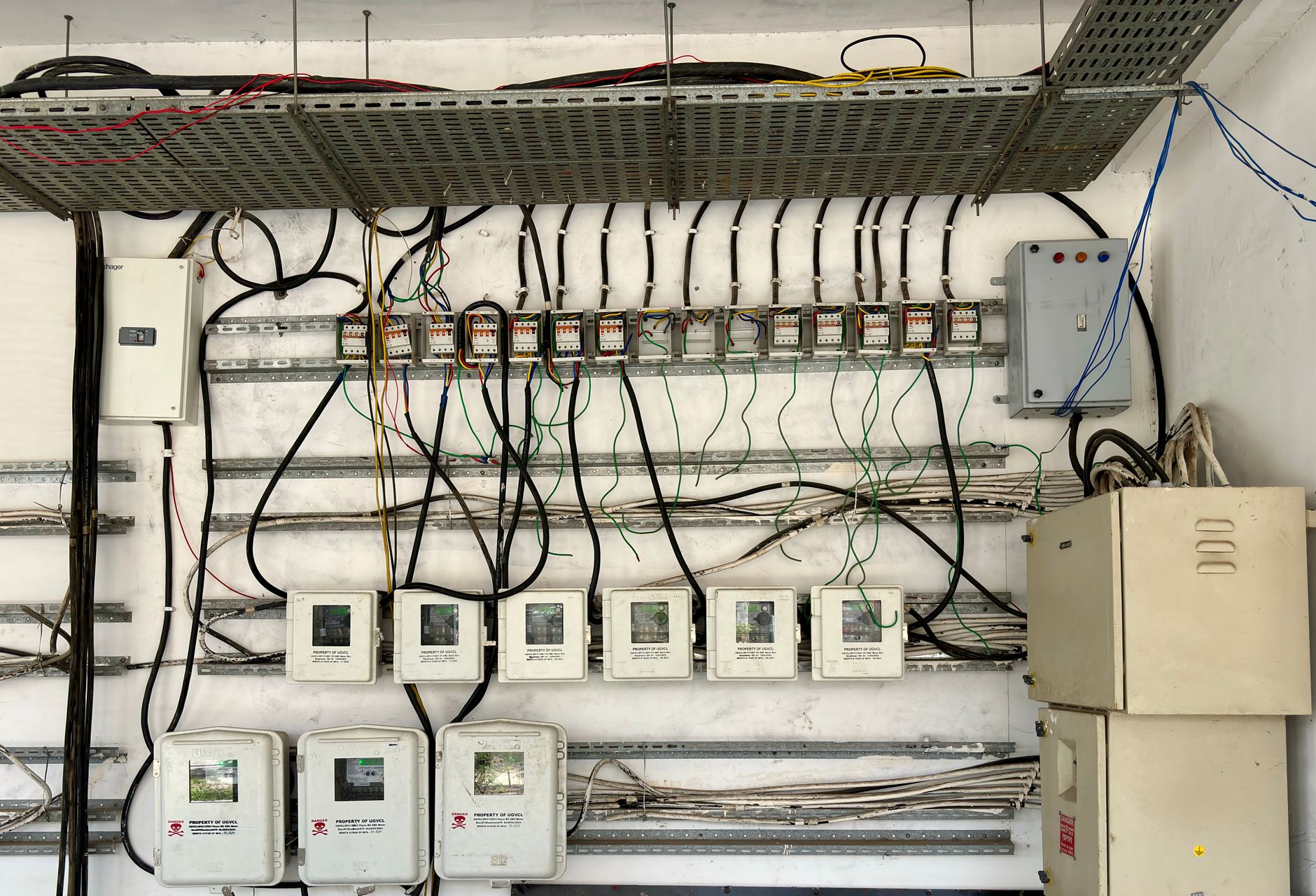
Swapping an outlet and running new wiring cost different money, and the quote shows the same deadline
Before you accept any date, answer these against your last twelve months of invoices rather than against your gut:
- Where does the tax code for the service you sell come from today, and who decides that code when a new service line appears? If the answer is "finance knows", that data isn't in the system, it's in somebody's head, and it leaves when they do.
- How many tax jurisdictions show up in your invoices, and in how many of them is the service delivered at the customer's address rather than yours? Every jurisdiction with its own withholding or place-of-supply rule is a rule that has to become code with an effective date on it.
- When a transmission fails, who finds out and how long does it take? If the answer is "we find out when the customer chases the invoice", you need a retry queue and an alert, and that's scope nobody put in the proposal.
Three bad answers don't mean the project is impossible. They mean it's a project, and it needs a proof of concept before anyone signs a fixed price.
Buying the compliance layer is almost always right, and it doesn't take the project off your desk
I rarely recommend writing the government or network plumbing in house. There are providers who do exactly that, charge per document, keep up with every schema version, and absorb the pain of each technical note the tax authority publishes on a Friday. Buying that piece is cheap next to keeping an engineer on fiscal-calendar duty forever.
What the provider doesn't do is your side of the counter. It takes a finished payload and hands back an accepted document. Whoever assembles the payload is your system, and that's where the project actually lives: the service catalogue with codes, withholding by jurisdiction, the link between a contract line and a billed item, rejection handling. All of that means touching your billing rules, which in most companies is the oldest and most patched part of the codebase.
And none of it is a reason to start over. I almost never approve rewriting a system from scratch, and a tax mandate with a statutory date is the worst possible trigger for one. You walk into an eighteen-month programme to solve a six-month deadline, and the deadline doesn't move.
"Transmitted successfully" is not the same as "accepted"
The cheapest way to look finished is to send the message, catch any response at all, and write "sent" on the screen. My favourite example of that theatre comes from somewhere else entirely: selling monitoring and delivering a health endpoint that returns 200 plus a colourful dashboard with no data behind it. Complete from the outside. Nothing under the bonnet.
With tax documents the theatre bills you fast, because there's a third party checking the work. The floor your system needs: validation against the official schema before transmission, with the error written in language the person at the counter can read instead of a raw code. Storage of the signed XML, which is the legal document, not the PDF, which is a picture of it. A queue for when the network drops or the service is down. And one screen where somebody sees today's rejections without filing a ticket to engineering.
If your supplier never mentioned rejections, they quoted the happy path.
The deadline that bites is two regimes running side by side, not the go-live date
A new field is easy. What wrecks the estimate is the transition window, when the same transaction carries the old tax and the new one at the same time, with rates that change year over year and an old regime that only disappears at the end of a schedule written by a parliament. In practice your system has to calculate tax by period, keep versioned rules, and correctly recalculate a December invoice when somebody cancels or replaces it in March.
That isn't a field. It's a versioned business rule, and it's the kind of thing a system with tax maths scattered across twenty places can't carry until the maths lives in one place. If you don't know where tax is calculated in your codebase today, that's task one, and it has its own timeline. It's the same work as walking into a system with no documentation and mapping what it really does, except with a date set by statute instead of by a sprint.
"But my system is old, can we even touch it?"
You can, and in most cases faster than your team guesses. Legacy isn't a question of age, it's a question of how many people can still explain how that part works. A 2014 system with centralised calculation and tests around it takes a new tax without drama. A 2021 system with the same fiscal rule copy-pasted into five screens is the worse patient.
What really costs money is the runtime and library versions, because digital signing and modern TLS depend on them. I've seen that be the entire hidden cost of a tax integration, and it's the same argument as moving an old PHP version up or rebuilding. Find it out in week one, not the night before certification.
What to do on Monday
Export the last twelve months of invoices and pull three numbers: how many distinct jurisdictions appear, how many different service codes you used, and how many of those invoices somebody typed outside the system. Take those three numbers into the budget meeting before you listen to anybody's timeline.
With them on the table you stop buying a promise and start buying scope. And if the supplier doesn't ask you for those numbers before giving you a date, you already know what the date is worth.
8 read minutes
Article content:
Ready to elevate your business
Schedule a meeting


You may also like





Newsletter