Articles.

Security isn't a feature you bolt on. It's how the team works.
There is one line in almost every software proposal I read: "we'll handle security later". That "later" has a date and a price, and it is rarely the person who promised it who pays. Why security is a team habit, not a backlog item, and how to spot it before you sign.
 Raquel Reis

I turned down a $480k contract. I'd do it again.
Last October, the biggest contract in Revin's history landed in my inbox. Six developers, twelve months, open-ended scope. I read it twice and said no. Here is what was in that proposal, why buying developer hours is the most expensive way to build software, and what happened next.
 Victhor Araújo
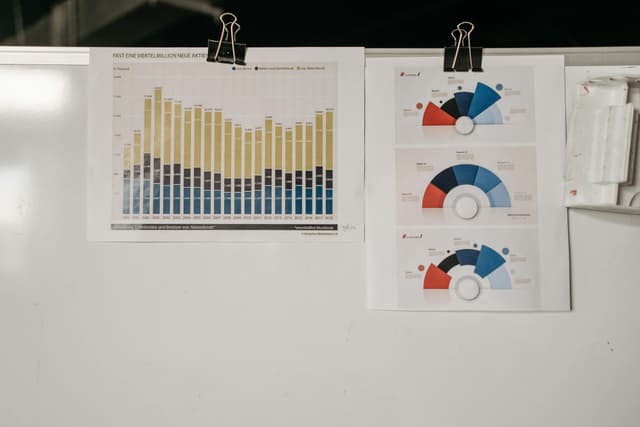
Roadmap theater: why a pretty Gantt chart hides a development team that does not deliver
The roadmap slide looks gorgeous: colorful bars, aligned milestones, everything "on track". But the product is not moving. Management theater is the art of looking like you ship without shipping. 6 signs you are paying for a show, not for software.
Victhor Araújo
How to evaluate a software development company: the 30-minute audit
You pay every month but have no idea if the project is moving forward or just spinning in place. Here are the 5 questions that reveal the truth in 30 minutes — no code knowledge required.
Victhor Araújo
The opaque daily standup: 7 hidden tech-health signals founders miss
Founders watch the daily, see "all green" and feel good. But the squad's real health lives in signals nobody brings to the meeting: hidden WIP, bus factor 1, stalled PRs. 7 patterns that separate opaque squads from senior ones.
Victhor Araújo
Pull request review time in remote teams: 2026 benchmark
Revin compiled PR review time from 100 remote squads in 2025. Market median: 14h. Top quartile (where Revin operates): < 4h. Long tail: 48h+. The difference is not talent — it is process. See benchmarks by team size and model.
Victhor Araújo
When to kill a product: a 4-question framework for founders
Killing a product is the most-avoided strategic decision by founders. Result: capacity consumed by a product already lost — months later, a pivot that could have happened in weeks. See the 4-question framework a senior squad uses to lead the conversation.
Victhor Araújo
An untested backup is not a backup: the quarterly validation protocol
Most companies have backup configured. Almost none tested it in the last year. When the incident hits, they find out the backup was broken, incomplete, or impossible to restore. See the 4-step protocol senior squads run quarterly.
Victhor Araújo
Dedicated development team vs project-based development: 2 models compared
RaaS (Revin as a Service) is continuous capacity for product evolution. Squad as a project is fixed-scope delivery. Both look the same outside, but assumptions and contracts diverge. Revin operates both — see which fits your case.
Victhor Araújo
AI code review: where it replaces humans and where it does NOT
AI already does 80% of trivial code review. But there are 4 areas only senior humans catch — and ignoring that became an expensive mistake in 2026. Revin combines AI + senior across all clients. See where each wins.
Victhor Araújo
Software outsourcing contract (MSA): the 3 most expensive mistakes and how to avoid them
A poorly designed international MSA costs 6-12 months of disputes before the first line of code. 3 mistakes show up in 80% of generic contracts. Revin operates with MSA templates reviewed in 3 jurisdictions. See the mistakes and what to check before signing.
Victhor Araújo
Security in AI environments: prompt injection, data leakage, and supply chain
3 new vectors arrived in 2025 with AI products: prompt injection, context leakage, and model supply chain. A senior squad treats them as platform decisions from day 1. See the 3 vectors and the right controls.
Victhor Araújo